HOA Backflow Compliance in Florida: A Trusted 2026 Property Manager Guide
HOA backflow compliance Florida is a recurring annual line item that, run well, never lands in your inbox as a problem. Run badly, it produces a stack of past-due notices, a backlog of failed-test paperwork, and the occasional shutoff warning that ends up on the board agenda. We test HOA portfolios across North Port and Englewood every month and have walked enough property managers through the loop to know exactly where the friction shows up.
This guide is written for property managers and HOA boards in Charlotte County who manage portfolios with irrigation, fire-line, community pool, and clubhouse backflow assemblies. It covers the full annual compliance loop on one page, what a typical Charlotte County portfolio looks like, how multi-device scheduling actually works, and the questions managers ask us most.
Table of contents
- What Florida requires of HOAs for backflow compliance
- The HOA backflow compliance loop on one page
- Common HOA backflow portfolios in Charlotte County
- How we schedule multi-device HOA backflow testing
- What happens when an HOA backflow device fails
- What property managers ask us most
- How to get your HOA backflow testing quote
- Frequently asked questions
What Florida requires of HOAs for backflow compliance
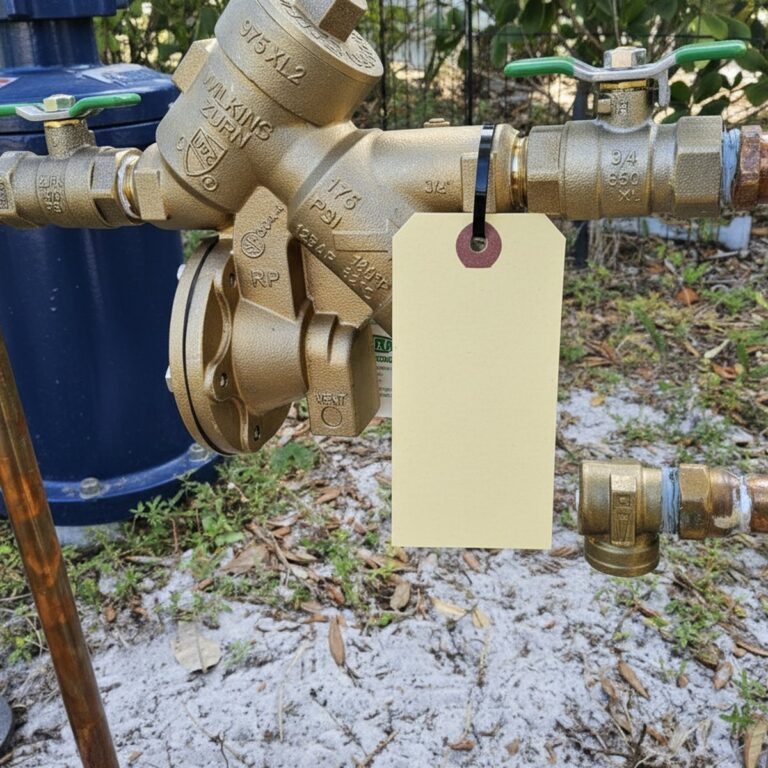
Florida treats HOA-managed properties the same as any other commercial or residential property for cross-connection control. Every backflow preventer on every cross-connection on every HOA property gets tested every year by a BAT-certified tester, and the certified test report has to be filed with the water utility within the testing year. The state rule is Florida Administrative Code 62-555.360(2). Day-to-day enforcement is delegated to North Port Utilities and Englewood Water District in Charlotte County.
The HOA-specific wrinkle is portfolio scale. A residential homeowner has one device. A small HOA might have four. A large planned community might have twenty-plus across irrigation, fire-line risers, clubhouse domestic supply, community pool auto-fills, and entry fountains. Each one of those devices gets its own annual test and its own certified test report, and each report gets filed individually with the utility.
Annual cycle on every cross-connection
The annual cycle resets per device based on the date of the last passing test on that specific assembly. That means in a portfolio with multiple devices installed at different times, the due dates do not necessarily line up unless the property manager and the tester coordinated a sync test in a prior year. Most well-run HOA portfolios get all devices tested in a single window each year (typically one or two consecutive days) so the manager only has to think about backflow once a year.
Multi-device portfolios trigger the same rule on each device
Every cross-connection device counts. Irrigation main, separate clubhouse irrigation pad, community pool auto-fill, fire-line riser per building or phase, and any clubhouse domestic backflow preventer all need annual testing and same-year filing. Missing one device in a portfolio means the portfolio is partially non-compliant even if every other device passed.
For the broader compliance picture (what Florida requires, how each utility enforces it), see our Charlotte County backflow testing pillar guide.
The HOA backflow compliance loop on one page
Four steps. Run them once a year per portfolio and the HOA stays clean.
Step 1: Inventory every device sized and located
The starting point for any HOA portfolio is a clean inventory. Each device: location, size, type (PVB, DCV, or RPZ), model and serial number, installation date if known, and the cross-connection it protects (irrigation pad A, fire-line riser building 3, community pool auto-fill, etc.). We build this inventory on the first visit if the HOA does not already have one. After that, the inventory is what drives every subsequent annual test and what we hand back to the board if ownership ever changes hands.
Step 2: Schedule one tester block for the whole portfolio
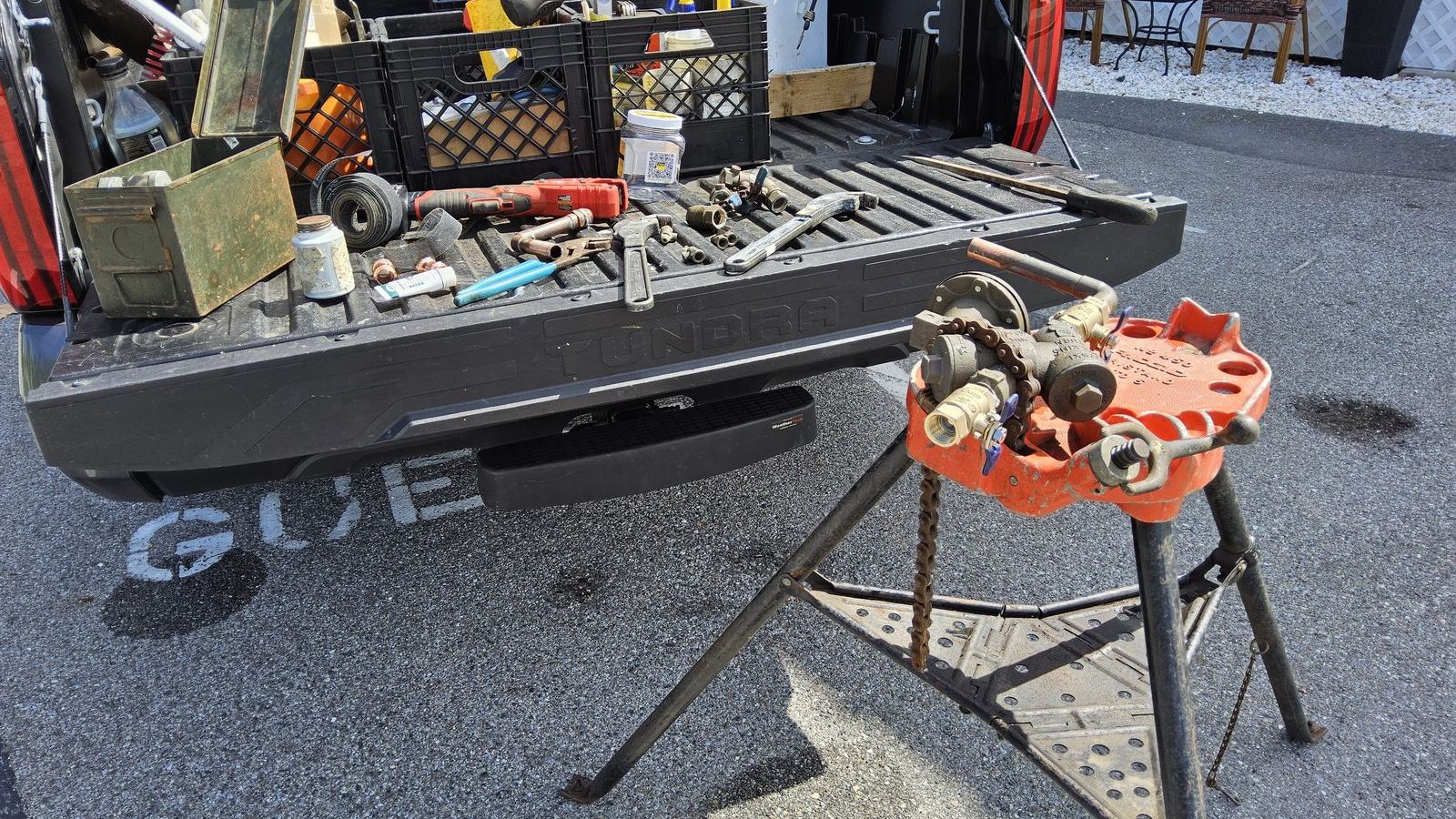
A multi-device HOA gets scheduled as a block: one tester, one or two consecutive days, all devices done in that window. The block scheduling is the operational magic. It means the property manager makes one call to one tester, gets one quote covering all devices, and gets one consolidated invoice and report packet at the end. The alternative (separate testers per device or one tester returning multiple times across the year) is what produces the friction.
Step 3: Report packet plus same-business-day utility filing
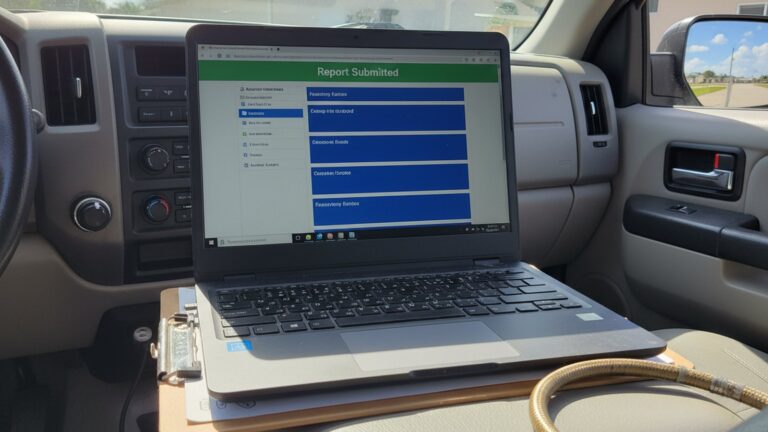
Each device gets its own signed certified test report. We file each one with the correct utility same business day (North Port Utilities portal for North Port HOAs, Englewood Water District approved-tester process for Englewood HOAs). The property manager receives the full report packet (all devices, all reports, all filing confirmations) within one business day of the visit.
For more on what a certified test report looks like and how each utility’s filing works, see our how-to-file your backflow test report guide.
Step 4: Re-test cycle for any failed device
Any device that failed the annual test gets a re-test scheduled after the corrective work is documented by the third-party contractor handling that work. The re-test follows the same on-site procedure and gets re-filed with the utility, closing the compliance loop on that device.
Common HOA backflow portfolios in Charlotte County
We test three rough portfolio sizes across the county. Knowing which bucket your community falls in helps frame the conversation.
Single-amenity HOAs (4 to 6 devices)
The smallest portfolios we test are HOAs with a single clubhouse or amenity center, a community pool, an entry fountain, and one or two irrigation pads serving common-area landscaping. Typical device mix: 2 to 3 PVB on irrigation, 1 to 2 RPZ on clubhouse domestic or community pool fill, and 1 entry-fountain backflow preventer. Most of these portfolios get fully tested in a single half-day visit.
Mid-size HOAs (10 to 25 devices)
Mid-size Charlotte County HOAs typically have a community pool, a clubhouse with domestic water service, an irrigation system serving multiple common-area zones, an entry-feature fountain or water feature, and one or more fire-line risers depending on the size of the clubhouse or amenity buildings. Typical device mix: a heavier irrigation count (5 to 10 PVB or DCV depending on the system design), commercial RPZ on clubhouse domestic, and DCDA on the fire-line riser. Most mid-size portfolios get tested in a single full day, with a second tester or a second day if the portfolio includes multiple fire risers.
Large HOAs (25-plus devices)
Large planned communities (multiple buildings, multiple phases, multiple fire-line risers per building) carry the heaviest annual backflow load in Charlotte County. Typical device mix: a fire-line riser per building phase, multi-zone irrigation across several common-area pads, several pool auto-fills if the community has multiple pools, and a clubhouse or amenity center with domestic RPZ. Large portfolios typically get scheduled across two consecutive days with the same tester to keep the report packet consolidated.
For the device-type breakdown that drives the mix at any portfolio, see our DCV vs RPZ vs PVB device comparison.
How we schedule multi-device HOA backflow testing
Block scheduling is what makes multi-device HOA testing efficient. Here is how the operational side works.
One window for the whole portfolio
The property manager picks a one- or two-day window during which we will be on site for the full portfolio. The window typically lands two to four weeks out from the call. For HOAs already late on a portfolio renewal, we tighten the window to the next available block.
Access coordination up front
For HOAs with locked-gate enclosures, vault-installed RPZ assemblies, or restricted-access fire-line riser rooms, we coordinate access with the property manager or facilities lead before the visit so the tester does not arrive and wait for keys. That up-front coordination is what keeps the block tight.
Single consolidated quote and invoice
The property manager gets one quote covering all devices in the portfolio and one invoice after the visit. No per-device pricing surprises, no extra filing fees, no re-billing for portal time. The number quoted on the phone is the number on the invoice.
Same-business-day filing per device
Every report from the block gets filed with the correct utility same business day. For HOAs whose portfolio spans both utilities (some communities near city limits have devices on both North Port Utilities and Englewood Water District), we handle both filings without making the manager track which device goes where.
What happens when an HOA backflow device fails
In a multi-device portfolio, some devices will fail their annual test. That is expected over a five- to ten-year horizon as wear items reach end of life. The HOA-specific handling has one extra coordination step on top of the standard failed-test process.
Step 1: Written report identifies the failure mode per device
Each failed device gets its own certified test report naming the failure mode in trade terms (worn check-valve springs, debris in the relief valve, damaged rubber seat). The report goes to the property manager along with the rest of the portfolio packet, so the manager has one consolidated document showing which devices passed and which need follow-up.
Step 2: Manager hires a licensed backflow service contractor
The corrective work on the failed device or devices is performed by a separate licensed backflow service contractor (often a plumbing contractor with the right Florida backflow service license). The HOA hires that contractor directly. A Plus does not perform the corrective work on failed devices. We provide the certified test reports that identify exactly what failed so the contractor arrives prepared.
We do not name specific contractors because endorsing a third party creates liability. A search for “Florida licensed backflow service contractor” surfaces options. Ask for proof of license and insurance before any work starts.
Step 3: We come back and re-test for re-certification
Once the contractor’s work is documented, the property manager calls us to schedule the re-test. The re-test follows the same on-site procedure and the new certified test report is filed with the utility same business day. Having one tester across the entire portfolio simplifies the re-test scheduling because we already know the device, the access, and the utility.
For the full failed-test sequence, see our guide on what to do when your backflow test fails.
Why having ONE tester across the portfolio simplifies the loop
Single-tester portfolios keep the inventory consistent, the report packets consolidated, and the re-test scheduling straightforward. Multi-tester portfolios (where the HOA has used a different tester each year or a different tester per device type) lose continuity, produce inconsistent reports, and create gaps where devices get missed in the inventory.
What property managers ask us most
These are the five questions we field most often from Charlotte County property managers.
How many devices can you test in a day?
Eight to fifteen residential PVB or DCV in a single day depending on travel between locations. Four to eight commercial RPZ in a single day depending on size and access. A mid-size HOA portfolio of fifteen mixed devices typically tests in one to one-and-a-half days. Large portfolios spread across two consecutive days.
Can you bill ownership directly?
Yes. Most HOAs are billed under the HOA or management company name on a single consolidated invoice. We can also split-bill if a portion of the portfolio is owned by a separate entity (a country club inside a residential HOA, for example).
Do you handle fire-line backflow testing in Charlotte County?
Yes. A Plus carries the fire-line backflow tester designation on both the North Port Utilities portal and the Englewood Water District approved-tester list. That matters because EWD splits the approved-tester list into general and fire-line designations, and a tester approved for one is not automatically approved for the other.
What is your scheduling lead time during peak season?
Peak season in Charlotte County runs March through May when most annual due dates cluster. Lead time during peak runs three to four weeks for new portfolios and one to two weeks for existing portfolio renewals where we already have the inventory. Off-peak lead time is typically same week or next week.
What if the HOA has devices on both North Port and Englewood utilities?
We handle both portals and both filings without making the manager track which device goes where. We file North Port devices through the North Port Utilities Cross-Connection Control portal and Englewood Water District devices through the EWD approved-tester process. The consolidated report packet identifies which utility each device was filed with.
How to get your HOA backflow testing quote
Two paths to a real quote.
Send us the device inventory or have us build one
If the HOA already has a backflow device inventory (from a prior tester, the original construction documents, or a recent compliance audit), send it. We will quote the full portfolio off the inventory in under one business day. If the HOA does not have an inventory, the first visit builds one and the quote for subsequent years is based on that.
Call (941) 786-8434 to walk through it
A short phone call works too. We will ask about the portfolio scale, the device mix you remember, the utility coverage (North Port, Englewood, or both), and any access constraints. With those answers we can quote a typical range on the call and tighten the number once we see the property.
Frequently asked questions
Are HOA backflow tests filed differently than residential backflow tests?
The filing format is the same per utility (North Port Utilities portal entry, EWD approved-tester email submission) regardless of whether the property is residential, commercial, or HOA. The HOA-specific difference is volume: an HOA portfolio gets multiple reports filed in a single window rather than one report per year.
Who is the certificate addressed to: the HOA or individual unit owners?
The HOA. The certified test reports cover common-area devices owned and maintained by the HOA. Individual unit-owner backflow preventers (typically irrigation backflow at single-family lots inside an HOA community) are separate accounts billed to the unit owner.
Do you offer a multi-device discount for HOA portfolios?
We quote portfolios on a portfolio basis rather than per-device, which usually lands the per-device cost below what an HOA would pay for individually scheduled single-device tests at the same property. The exact number depends on the portfolio scale and the device mix. Call (941) 786-8434 for a quote.
What if the HOA portfolio has both North Port and Englewood devices?
We test and file both without making the manager track which utility each device goes to. The consolidated report packet identifies which utility processed each filing. This is common for communities near city limits or near the boundary between the two utility service areas.
Ready to schedule your HOA backflow portfolio?
Call (941) 786-8434 or request a portfolio quote online. Florida BAT #PR14723. Single-tester portfolio coverage across North Port and Englewood. Same-business-day filing on every device.
Related reading for property managers:
- Charlotte County backflow testing pillar guide
- DCV vs RPZ vs PVB device comparison
- What to do when your backflow test fails
- How to file your backflow test report in Florida
- Florida backflow test due date guide
- Backflow testing cost in North Port, FL
- Backflow testing cost in Englewood, FL
- Annual backflow testing service
Industry references for HOA backflow compliance Florida
HOA backflow compliance Florida portfolios typically include a mix of device types from three different ASSE standards (RPZ, DCV, PVB) plus the assembly-identification baseline from the USC FCCCHR Manual. The USC Foundation for Cross-Connection Control and Hydraulic Research is the field reference HOA portfolio inventories trace back to. The ASSE 1013 RPZ standard and ASSE 1015 DCV standard cover the test-procedure baseline for the two most common high-hazard commercial devices in HOA backflow compliance Florida portfolios.
More for Charlotte County backflow testing customers
Two additional resources from our 2026 testing-only cluster cover scenarios that come up often in conversations with North Port and Englewood property owners.
- Backflow testing near me, Charlotte County guide walks what a backflow testing near me search actually returns, why locally owned matters, and how to verify any tester you call is registered with your specific utility.
- Fire line backflow testing in Florida, commercial guide covers DCV and DCDA fire-sprinkler riser testing, why the Englewood Water District splits the approved-tester list into general and fire-line designations, and the on-site procedure for fire line backflow testing in Florida commercial properties.